
 Slovenia
Buying Heritage Homes in Idrija: Goriška Guide
Buying Heritage Homes in Idrija: Goriška Guide
Why heritage homes Idrija draw buyers to Goriška
Quick Answer: Heritage homes in Idrija attract buyers because of their cultural significance, distinctive architecture and proximity to a living industrial-heritage landscape; many buyers choose Idrija for character rather than cookie-cutter returns. Bled market context and local guides can help situate Idrija within Goriška's broader appeal.
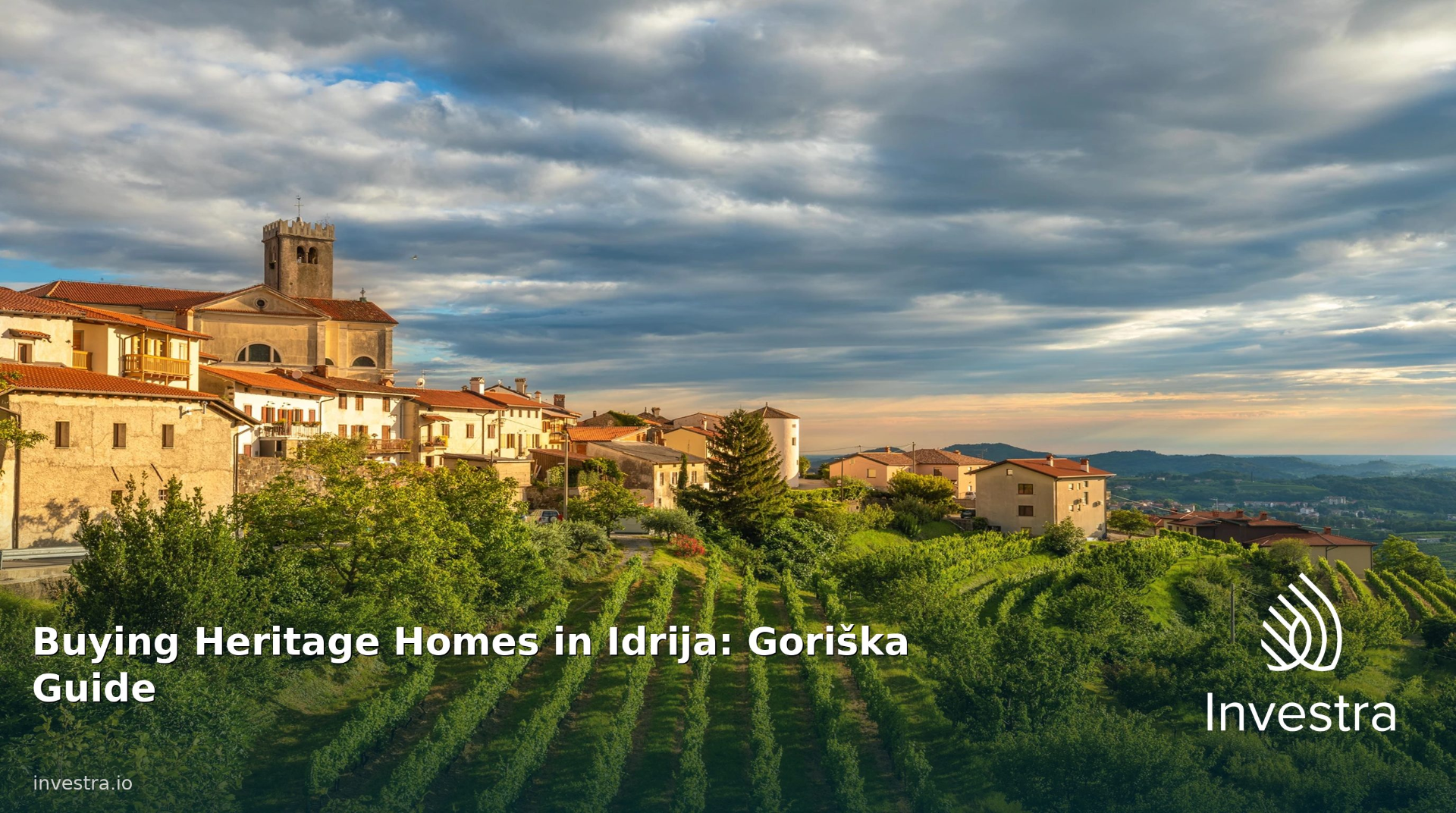
Idrija sits at a fascinating intersection of industrial history and small-town life. The town's narrow streets, wooden facades and mercury-mining legacy give many houses a character you'll rarely find in newer suburbs. In my experience, buyers who target heritage homes are looking for more than square metres — they're buying a story and an environment that changes how a property is used and valued. That reality has consequences for planning: historic fabric often dictates what you can change and how you manage a renovation budget.
What surprised many buyers is how local pride translates into strict conservation attention from municipal authorities and community groups. You'll see plaques, interpretive trails and a strong sense of responsibility toward original features. That can be an advantage: restored heritage properties often gain cultural cachet that helps with rentals geared to tourists or discerning long-term tenants. For practical background on nearby markets and how they compare, refer to broader Slovenian city guides such as the Ljubljana real estate market guide and the Maribor real estate market guide to understand regional dynamics.
Before you get emotionally attached to a period façade, ask: do I want a project? Heritage homes often require ongoing care. If you're serious about buying in Idrija, connect with local specialists early — heritage-focused architects, masons skilled with traditional materials, and conservation officers. Firms such as Findes Group & Partners can connect you to advisory teams with regional experience, and consultants like Siniša Dagary offer investment-focused perspectives.
Quick definitions: what counts as heritage homes Idrija?
Quick Answer: "Heritage homes Idrija" refers to residential properties in Idrija that carry historical, architectural or cultural protections and are often within conservation zones or linked to mining heritage; check official registers to confirm a property's status. See local registration practices and resources like Bled new-build guide for renovation context.
Terminology matters. In practice, a "heritage home" could be a listed building, a house within a protected historic core, or a property with recognised cultural value because of its age, construction technique or links to Idrija's mining past. The municipality keeps registers, and national authorities may list sites on cultural heritage inventories. I always recommend verifying any heritage designation via the official municipal cadastre and the national cultural heritage agency before signing anything.
Designations influence what you can alter: protected façades, original interior features, rooflines and chimneys are often the priority. Sometimes only particular elements are protected while others can be modernised. If you're evaluating a property, ask for the exact citation in the heritage register and copies of the conservation rules that apply to that parcel. This step saves surprises during renovation planning and when applying for permits. Want a deeper look at how renovation interacts with new builds in Slovenia? Check the Ljubljana new-build guide for practical comparisons.
How the legal framework affects purchases and renovations
Quick Answer: Legal protections for heritage homes can restrict works and require conservation approvals, so buyers must confirm conservation orders, permit processes and applicable building codes with local authorities and a specialised lawyer. Use professional verification rather than relying on listing descriptions.
When we think about ownership in Slovenia, it's not just about land registry entries. A heritage designation layers additional regulatory obligations that travel with the title. The reality is that even a private owner may need written consent from municipal conservation officers, and in some cases national cultural authorities, before carrying out alterations. That consent can cover materials, techniques and even paint colours. What does this mean practically? If you plan to change windows or extend a kitchen, early-stage consultation with a conservation architect and a lawyer who knows Slovenian heritage law avoids costly rework.
Always request all legal documents during due diligence: title deeds, any conservation orders, planning decisions affecting the property, and notarised easements. If the property is part of a larger historic complex, there may be communal rules or neighbourhood charters. For foreign buyers or those unfamiliar with local practice, consider working with advisors listed by regional experts—resources like Buying property in Ljubljana explain buying steps you can adapt to Idrija's context. Advisory services such as advisory services can guide you through legal and strategic choices.
The buying process in Idrija: step-by-step considerations
Quick Answer: Buying a heritage home in Idrija follows standard property purchase steps but with extra heritage checks, specialist surveys and conservation approvals—engage a local notary, a heritage architect, and consult municipal registers early. Use local market guides to frame offers and timelines.
The sequence you'll follow resembles buying elsewhere: finding a property, negotiating, signing a preliminary contract, performing due diligence, and completing at a notary. The difference here is the extra steps tied to the heritage status. For example, after preliminary agreement you should commission a conservation condition report that assesses original materials, historic joinery, and foundations, and that flags urgent stabilisation works.
In my experience, buyers who skip that report face budget and timeline shocks. Also, before committing, request copies of any past renovation permits—these show what previous owners were allowed to do. If a house sits inside a protected zone, talk to the municipal planning office about potential constraints and likely processing times for your intended works. For comparative processes in other Slovenian centres, look at city guides like Maribor real estate market guide and Koper real estate market guide to understand how regional administrations differ.
Due diligence essentials: surveys, title checks and heritage records
Quick Answer: Essential due diligence for heritage homes Idrija includes structural and conservation surveys, a full title search, and verification of any heritage listing or easements—obtain reports from qualified specialists and confirm records with the municipality. Contact advisory teams to assist.
Due diligence for a heritage home needs to be deeper than a basic condition survey. You should commission: a structural engineer experienced with old masonry; a conservation surveyor who can identify historic materials and undocumented alterations; and a title search from a notary that confirms boundaries and encumbrances. Ask for documentation of previous interventions—who did the work and under what permits? Often the quality of past repairs determines whether a building can be reused as family housing or requires substantial intervention.
A practical tip: work with local professionals who have restored similar buildings in Idrija or Goriška. They know where hidden problems show up—damp behind cupboards, incompatible cement mortars, or reused modern windows that compromise authenticity. For legal and transaction support, you can reach municipal and legal advisory contacts through regional partners such as Findes Group & Partners advisory team. If you want a commercial advisory perspective, investment consultation contacts can help coordinate the professional team.
Getting permits: conservation authorities and practical timelines
Quick Answer: Permits for work on heritage homes in Idrija usually require approval from municipal conservation officers and sometimes national heritage bodies; timelines vary, so plan early and budget for staged approvals. Verify current procedures with the local municipality and conservation office.
Permits are often the most time-consuming part of a heritage renovation. Authorities will want drawings, detailed material specifications and sometimes a method statement for how historic fabric will be treated. Many buyers are surprised by the level of documentary detail required—it's not enough to present a sketch; conservation-sensitive projects need clear restoration strategies and, increasingly, documentation that ruins will be stabilised and traditional materials used where possible.
Because the pace can be slow, I advise preparing a phased approach. Start with a permit for urgent stabilisation works (roofing, structural repairs) while you develop detailed plans for interior work. Discuss realistic timelines with the municipal office and ask previous applicants about their experience. For broader procedural comparisons and timelines in Slovenia, see practical buying guides like Buying property in Maribor and Buying property in Bled which outline permit expectations you can adapt locally.
Renovation realities: materials, craftsmen and authenticity
Quick Answer: Renovating heritage homes Idrija often requires traditional materials and skilled craftsmen; source local specialists familiar with timber, lime mortars and historic joinery, and plan for testing and prototyping before full-scale works begin.
One of the most rewarding parts of a heritage project is seeing original materials and techniques restored. But it can also be the most challenging. Traditional lime mortars, for instance, behave differently from modern cement. Use incompatible materials and you may cause long-term damage. We’ve seen projects where modern replacement solutions trapped moisture and accelerated decay.
Find craftsmen with a track record on historic buildings. They may be local masons, carpenters or roofers who understand old joints and can replicate worn profiles. Where you need specialist glass, handmade tiles or period fittings, plan procurement early—lead times can be long. Ask builders to provide mock-ups for approval by conservation officers and consider keeping documentary records of interventions; those files help future owners and can simplify later permit renewals. For broader renovation management tips, review regional new-build and renovation guides such as the Maribor new-build guide and Bled new-build guide.
Financing, grants and insurance options for heritage projects
Quick Answer: Financing heritage homes Idrija often involves a mix of private loans and project financing; potential grants or incentives may exist for conservation work—check municipal and national cultural funds and consult local banks and advisers to verify current offerings.
Funding a restoration is rarely identical to financing a new-build. Lenders often want a clear plan and staged cashflow tied to completed milestones. Some banks will lend against the restored value in stages, but terms depend on documentation, projected costs and the borrower’s profile. It's important to speak directly with lenders and present a conservation-aware business plan if the project includes rental or tourist accommodation elements.
There may be public or EU-funded grants targeted at preserving cultural heritage — these programs change over time. The correct way to confirm availability is to contact the municipal cultural office, national heritage authorities and regional development agencies. I recommend asking a trusted advisor to help assemble grant applications. For advisory pathways and contact points, consider networking with regional experts like Siniša Dagary and consulting the Findes Group & Partners team.
Taxes, fees and ongoing ownership costs in Slovenia
Quick Answer: Ownership of heritage homes Idrija carries standard Slovenian property taxes and transaction fees, plus potential additional conservation obligations; verify current tax regimes and fees with a Slovenian tax advisor or the municipal office. Do not rely on third-party estimates without confirmation.
Taxes and fees influence the affordability of any property. For heritage homes, you face typical purchase costs (notary, transfer fees where applicable) and ongoing expenses such as municipal property tax, insurance and maintenance. Because historic buildings often require specialist upkeep, maintenance budgets can be higher than for modern properties. The prudent approach is to have a multi-year maintenance plan and to get insurance quotes that explicitly cover conservation work and traditional materials.
When you need current figures—transfer taxes, VAT for specific transactions, or allowable deductible costs—contact a local tax advisor or the municipal finance department. Real estate platforms and local agent guides like Ljubljana rental market guide can give context, but always verify numbers through official sources before making financial commitments.
Renting heritage homes: short-term vs long-term in Idrija
Quick Answer: Heritage homes Idrija can be viable for both short-term tourism lets and long-term rentals, but you must check local rental rules, tourist regulations and insurance terms; market demand and operational logistics determine the right model. Validate current regulations with municipal tourism offices.
If you're thinking about letting a restored house, ask whether your intended use aligns with local tourism policy. Heritage properties can fetch interest from visitors seeking authentic experiences, but managing short-term lets involves compliance with sanitation, safety and registration rules. You may need to meet specific fire-safety or accessibility standards if you take a short-term letting model. Long-term rentals, on the other hand, demand less operational turnover but rely on steady demand in the town and the region.
What should inform your decision? Consider seasonality, management capacity, and how much adaptation the property allows without damaging historic fabric. Operating a guest-focused property often demands alterations—additional bathrooms or modern heating—not always compatible with conservation rules. Talk to local letting agencies and review regional market guides such as the Maribor rental market guide and Bled rental market guide to get a sense of regional demand patterns.
Practical project roadmap: from purchase to a finished heritage renovation
Quick Answer: A practical roadmap for heritage homes Idrija includes pre-purchase surveys, securing conservation approvals, phased contracting with specialist craftsmen, and staged financing—document each stage and keep the municipality informed. Use experienced advisors to sequence works correctly.
A clear roadmap reduces surprises. Start with a feasibility phase: surveys, legal checks and an initial budget estimate. Move to the permissions phase: submit conservation-sensitive plans and apply for any grants. During restoration, execute in logical stages—first stabilise the envelope (roof, walls), then make the building weathertight, then tackle interiors. Good contractors will want a clear handover and a tailored maintenance plan at completion.
We’ve seen projects stall because owners tried to do everything at once. Plan milestones, link financing to achieved milestones, and maintain open lines with conservation officers. Keep photographic records and technical notes; they support future maintenance and may simplify subsequent changes. If you need strategic planning help, consult specialists via advisory services or reach out to the local advisory network at Findes Group & Partners advisory team.
Investment Disclaimer
Quick Answer: Investment Disclaimer — Expert analysis and investment guidance from Investra.io, your trusted SI real estate platform.
The information provided in this article is for educational and informational purposes only and should not be construed as financial, legal, or investment advice. Real estate investments carry inherent risks, and past performance does not guarantee future results. Investors should not invest money they cannot afford to lose. Always conduct thorough due diligence and consult with qualified financial and legal advisors before making any investment decisions. Investra.io does not guarantee returns on any investment.
Frequently Asked Questions
Quick Answer: Frequently Asked Questions — Expert analysis and investment guidance from Investra.io, your trusted SI real estate platform.
Can a foreign buyer purchase a heritage home in Idrija?
Foreigners can buy property in Slovenia, but rules vary depending on nationality and the type of property. Heritage status itself is not an automatic bar to foreign ownership, but additional approvals or procedural steps might apply. The best way to verify current legal conditions is to consult a Slovenian notary or the municipal property office in Idrija, and to review guides on buying property in Slovenia—use resources such as Buying property in Ljubljana for a procedural overview that you can adapt to local circumstances. For tailored investment advice, contact advisors such as investment consultation.
How do I confirm if a house is officially protected or listed?
To confirm a listing, request the property's cadastral details from the municipal land registry and ask the municipal cultural heritage officer for any conservation orders. The national heritage register will show formally protected monuments. During purchase, insist that the seller or their lawyer provides the exact heritage registration citation and copies of related permits or restrictions. If in doubt, hire a local conservation architect to interpret those documents for you.
What surveys should I commission before buying a heritage home?
Commission a structural engineer familiar with historic masonry, a conservation surveyor to assess historic fabric, and a full title and encumbrance search from a notary. If the property has timber elements, a specialist carpenter or entomologist can check for wood-boring insects. Ask surveyors for clear, itemised reports and recommended remedial actions so you can budget realistically. Local restoration experience matters—seek professionals who have worked on similar Goriška or Idrija properties.
Are there grants or funding for restoring heritage homes in Goriška?
Public or EU grants sometimes support cultural conservation, but programs change over time and eligibility varies. To check current options, contact the Idrija municipal cultural office, the Slovenian Ministry responsible for cultural heritage, and regional development agencies. A professional adviser or grant writer can help identify and apply for suitable programs. For advisory introductions, consider regional consultants listed on sites like advisory services or consult with firms such as Findes Group & Partners.
Will I be able to install modern heating and insulation in a heritage home?
Modern systems are often possible, but conservation rules may restrict methods that alter historic fabric. For example, internal insulation can change wall vapour behaviour and damage original plaster. Start with a technical study to identify compatible solutions—options may include reversible insulation, underfloor heating that doesn't require wall alterations, or discreet ventilation systems. Always present your proposed technical approach to the conservation authority before installation.
How long do conservation permits usually take in Idrija?
Processing times vary by application complexity and workload at the municipal office. Simple stabilisation permits may be quicker, while comprehensive restoration permits take longer because they need detailed technical documentation and sometimes expert opinions. The only reliable way to know current timelines is to speak with the Idrija municipal planning or conservation office and review recent approvals for comparable projects. Local architects and builders who have recently applied can also offer practical timeline expectations.
Can I adapt a heritage home for short-term tourist rentals?
Adapting a heritage home for tourism is possible, but check local tourism regulations, safety standards and conservation rules. Some adaptations necessary for a guest property—additional bathrooms, emergency exits, or accessibility measures—may require permits or conservation approvals. Also assess the operational load on the building: frequent turnover can stress utilities and fabric. Consult municipal tourism offices and a legal adviser before committing to a short-term let strategy.
How should I budget for ongoing maintenance of a heritage house?
Plan for regular inspections and preventive conservation. Traditional materials need periodic attention—repointing in lime mortar, roof tile maintenance, timber re-works—so set aside a maintenance reserve and schedule routine checks. Instead of guessing numbers, create a multi-year maintenance plan with a conservation architect that lists likely interventions and recommended inspection intervals. This plan becomes a working budget that you can update as works are completed.
Who should I contact for a local advisory team in Goriška?
Build a team that includes a notary, a conservation-savvy architect, a structural engineer, and a project manager or local agent. Regional contacts include the Findes advisory network at Findes Group & Partners advisory team and investment consultants such as Siniša Dagary. For transaction-focused guidance, Investra city guides like the Ljubljana real estate market guide and the Maribor real estate market guide illustrate the type of due diligence you should replicate in Idrija.
Recommended Reading
Quick Answer: Recommended Reading — Expert analysis and investment guidance from Investra.io, your trusted SI real estate platform.
- Ljubljana real estate market guide
- Buying property in Ljubljana
- Ljubljana rental market guide
- Ljubljana neighbourhood guide
- Ljubljana new-build guide
- Maribor real estate market guide
- Siniša Dagary — Investment Consultant
- Business Strategy Blog
Connect With Investra
Quick Answer: Connect With Investra — Expert analysis and investment guidance from Investra.io, your trusted SI real estate platform.
Follow and connect with Investra on social media for market updates and property insights:
Connect With Investra
Quick Answer: Follow Investra for verified market context and practical property research.
Related Posts
No related posts available.
